Category: Lifestyle

  • Walking the Dog Has Changed: How British Pet Owners Are Turning Daily Walks Into Mindful Rituals

    Walking the Dog Has Changed: How British Pet Owners Are Turning Daily Walks Into Mindful Rituals

    There’s a quiet shift happening on Britain’s footpaths. You might have noticed it yourself, dog owners walking without earphones in, phones tucked away, just watching a spaniel barrel through a puddle with unbridled joy. What used to be a task on the daily to-do list has, for a growing number of people, become something closer to a ritual. Mindful dog walking in the UK is having a moment, and honestly, I think it’s one of the nicest trends I’ve come across in a long while.

    I’d been guilty, for years, of treating my morning walk as dead time. Podcast on, pace quick, mind already at work before I’d even got to the end of the road. Then one grey Tuesday in February I forgot my earphones. Forced into silence, I actually looked around. My dog, Monty, had stopped to investigate a moss-covered wall with the intensity of a forensic scientist. I waited. I watched. Something loosened in my chest. That was the start of it for me.
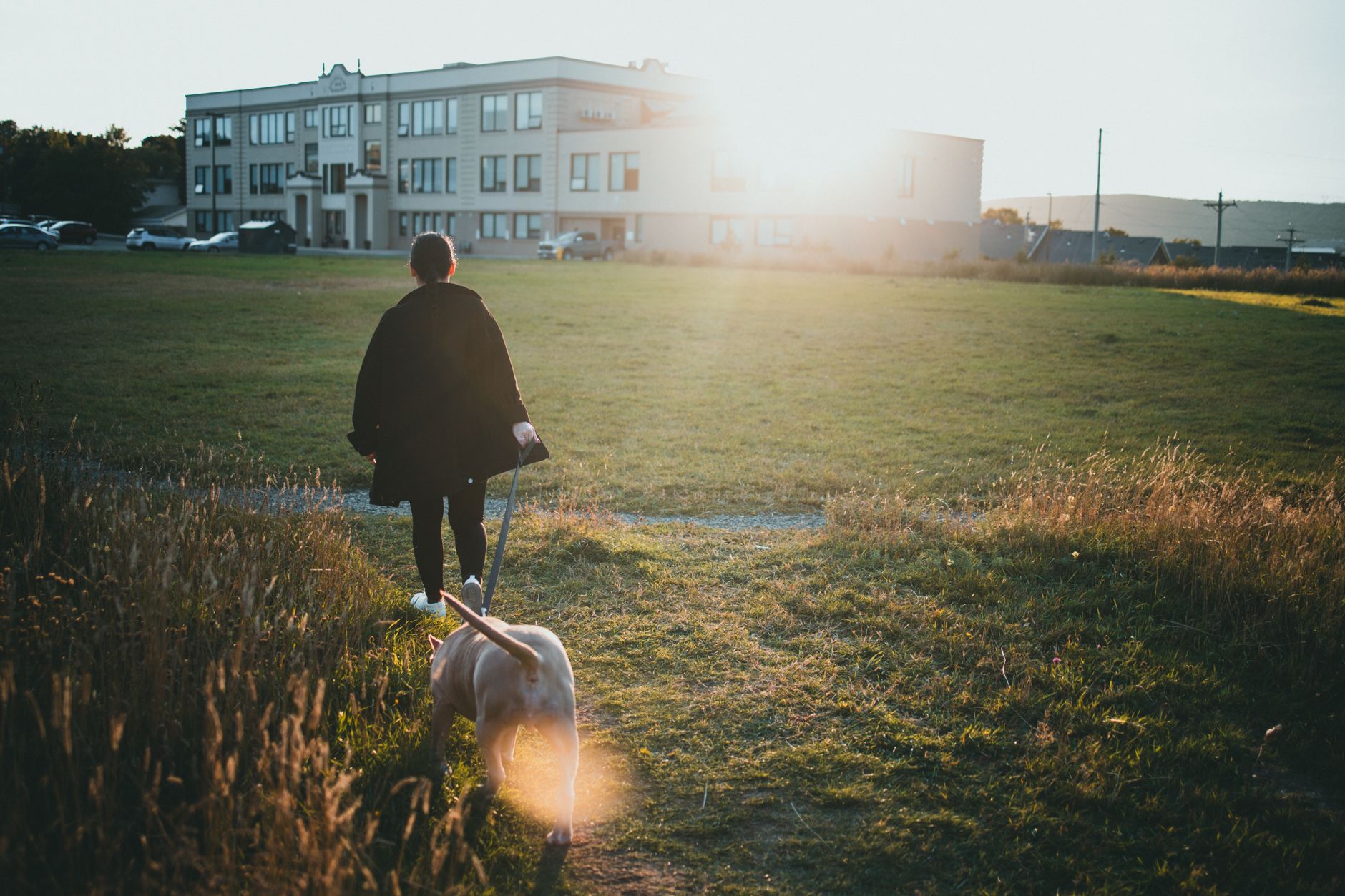
    Person enjoying a mindful dog walking UK moment in a quiet green park
    Photo by Jonathan Cooper on Pexels

    Why so many British dog owners are putting the phone away

    The numbers tell an interesting story. According to the Mental Health Foundation, spending time in nature is one of the most consistently effective ways to reduce anxiety and low mood. Meanwhile, the UK’s dog-owning population sits at around 13 million households, so there’s a very large group of people who already have a built-in reason to step outside twice a day, every day. The penny has started to drop: those 20 or 30 minutes don’t have to be a scroll-and-stride. They can be something genuinely restorative.

    Mental health conversations have opened up considerably over the past few years, and with them has come a wider acceptance that you don’t need an expensive retreat or a meditation app subscription to feel better. You just need to be fully present somewhere. For dog owners, that somewhere comes with a lead attached and a wagging tail to follow.

    From the Peak District to Peckham Rye: the green spaces making it possible

    Part of what makes mindful dog walking in the UK so accessible is the sheer variety of landscape on offer. In the Peak District, walkers on the Monsal Trail move through old railway cuttings where the air smells of damp limestone and wild garlic in spring. On the North York Moors, the silence between gusts of wind is total. Even in cities, the parks are genuinely good. Hampstead Heath on a weekday morning feels more like countryside than London. Clapham Common, Victoria Park, Glasgow’s Kelvingrove Park, these places are underused as genuine mental health resources, and dog owners, almost by obligation, use them daily.

    I spoke to a friend who lives in Hackney and walks her lurcher through London Fields every morning before work. She told me she’d started leaving her mobile at home entirely on Thursdays. “It felt terrifying the first time,” she said. “By the third Thursday I couldn’t imagine going back. I actually notice things now.”

    What mindful dog walking actually looks like in practice

    It isn’t complicated, and that’s rather the point. The core idea is simply to let the walk be the thing, rather than a backdrop for something else. A few approaches that dog owners around the country have found useful:

    Leave the earphones at home, at least for part of the walk. Birdsong, wind, the crunch of gravel underfoot, these aren’t nothing. Your nervous system responds to them differently than it does to a news podcast at full volume. Pay attention to what your dog is paying attention to. Dogs are genuinely brilliant mindfulness teachers. They have no interest in yesterday’s emails or tomorrow’s meeting. They are just here, right now, following a scent trail with their whole self.

    Try what some people call a “sensory check” partway through: name five things you can see, four you can hear, three you can physically feel (the cold air, the texture of the lead, ground underfoot). It sounds faintly silly until you try it on a November morning in a muddy field and realise your shoulders have dropped three centimetres.

    Slow down. Deliberately. Most of us walk dogs at our pace, not theirs. Letting a dog set the tempo, sniffing here, doubling back there, turns a 20-minute march into something more like a wander. And wandering, it turns out, is good for the brain.

    The digital detox element: why stepping back from screens matters

    There’s something about the combination of movement, fresh air, and a creature who demands your actual physical presence that makes a dog walk uniquely effective as a digital detox. Your dog doesn’t care about your notifications. They want you to throw the ball. They want you to notice the same duck they’ve been tracking for five minutes. The relationship pulls you out of the screen world in a way that willpower alone rarely manages.

    A lot of people are drawn to secondhand and slower living more generally, there’s a broader cultural appetite for stepping back from the noise, which you can see in everything from the resurgence of British shoppers choosing charity shops over fast fashion to the rise of allotment waiting lists. Mindful dog walking fits squarely into that same impulse: a reclaiming of ordinary daily life as something worth being present for.

    What the research suggests about walking and mental clarity

    There’s solid backing for the instinct here. Stanford University researchers found that walking in a natural setting reduced activity in the part of the brain associated with repetitive negative thinking, compared to walking along a busy road. Closer to home, researchers at the University of Exeter’s European Centre for Environment and Human Health have consistently found that time in green or blue spaces correlates with better psychological wellbeing across UK populations. The NHS even references “green social prescribing” as a formal approach to mental health support in some areas. Putting the phone down and taking the scenic route isn’t self-indulgence. It’s actually fairly good medicine.

    Small habits that stick

    The best thing about weaving mindfulness into a dog walk is that you’ve already got the structure. The walk is happening regardless. You’re not adding a new habit from scratch; you’re just doing the existing one differently. Start with one walk a week where the phone stays in your pocket. See how it feels after a fortnight. I’d bet good money you’ll extend it.

    Monty still investigates that moss-covered wall when we pass it. I still wait. And I’m still grateful I forgot my earphones that grey Tuesday morning.

    Frequently Asked Questions

    What is mindful dog walking and how is it different from a normal walk?

    Mindful dog walking means being fully present during your walk rather than distracted by a phone, podcast, or mental to-do list. The idea is to use your senses, observe your surroundings, and follow your dog’s lead rather than rushing through the route on autopilot.

    Can regular dog walks genuinely improve mental health?

    Yes, there’s good evidence for it. Research supported by the Mental Health Foundation and studies from the University of Exeter both point to time in green spaces reducing anxiety and low mood. Combining movement, nature, and social bonding with an animal makes dog walking particularly effective.

    Do I need to go somewhere rural for mindful dog walking in the UK?

    Not at all. Urban parks like Hampstead Heath, Kelvingrove in Glasgow, and Victoria Park in London work just as well. The key is slowing down and paying attention, which you can do on any green space, even a local rec ground on a Tuesday morning.

  • Second-Hand First: Why British Shoppers Are Making Charity Shops Their Opening Move

    Second-Hand First: Why British Shoppers Are Making Charity Shops Their Opening Move

    There was a time, not so long ago, when ducking into a charity shop felt like something you did quietly. You’d scan the racks quickly, pay at the till without making eye contact, and stuff your find into a tote bag before anyone could notice. Not any more. The charity shop shopping UK trend has done a full turn, and these days people are proud to announce that their favourite jumper cost £3.50 from the local hospice shop. I’d go as far as saying it’s become a kind of cultural badge of honour.

    Walk down any British high street on a Saturday morning and you’ll see the queue forming outside Oxfam before the shutters are even up. There are people with tote bags and an eye for treasure, chatting to the volunteer behind the till like they’re old friends. It’s warm, it’s unhurried, and it feels genuinely different from the click-and-collect grind that most retail has become.

    Shoppers browsing clothing rails inside a UK charity shop, reflecting the charity shop shopping UK trend
    Photo by Jan van der Wolf on Pexels

    From last resort to first choice

    The shift didn’t happen overnight. For years, charity shops occupied a specific mental slot: they were for students on tight budgets, or for people who absolutely needed to make their money stretch. The idea that you’d choose them first, over a brand-new item, would have raised eyebrows at a dinner party. Now it’s the opposite. Turning up with something from a charity shop is a talking point, a small story to tell.

    According to the Charity Retail Association, there are more than 11,200 charity shops operating across the UK, and the sector has seen consistent growth in both footfall and revenue over the past few years. That’s not a niche hobby. That’s a mainstream retail habit reshaping the high street.

    A big part of the change is environmental awareness. Younger shoppers especially are thinking about where things come from and where they’ll end up. Fast fashion has taken a serious battering in the public conversation, and buying second-hand is one of the most direct ways to step away from it without giving up on clothes altogether. But I think there’s something else going on too, something less obvious than eco-consciousness.

    The joy of not knowing what you’ll find

    Charity shop shopping has an element of treasure hunting that no algorithm can replicate. You cannot personalise it. You cannot filter by size and colour and price and expect the perfect result in two clicks. You have to show up, root through the rails, and occasionally hold something up to the light and think “actually, yes.” That unpredictability is part of the appeal.

    I’ve had some of my best finds in a Cancer Research UK shop in a town I was just passing through. A barely-worn wool coat for £12. A hardback first edition that I still have on my shelf. There’s a particular kind of satisfaction attached to those discoveries that you simply don’t get from a next-day delivery box on your doorstep.

    Hospice shops deserve a special mention here, because they’ve quietly become some of the best-curated charity shops on the British high street. Many of them receive donations from local families who’ve had time to sort through belongings carefully, which means the quality of stock can be genuinely high. I’ve found designer scarves, Le Creuset pots, and good-as-new children’s books in hospice shops that a department store would have charged five times as much for. The fact that the money goes directly to end-of-life care in the local community makes it feel even better.

    Who’s shopping second-hand now?

    The demographic picture has shifted noticeably. It’s not just students and retirees browsing the rails. Young professionals in their thirties are building entire wardrobes around charity shop finds. Parents are kitting out nurseries second-hand. Home enthusiasts are sourcing ceramics, glassware, and vintage kitchenware to give their homes some personality rather than buying identikit stuff from the same handful of homeware chains everyone else uses.

    Social media has played a role too, though perhaps not in the way you’d expect. It’s less about influencers promoting charity shopping and more about ordinary people sharing their finds, the £4 blazer that looks like it cost £80, the vintage pyrex dish that’s now the centrepiece of a kitchen shelf. Those posts generate genuine enthusiasm rather than the faint envy that a lot of sponsored content produces.

    Oxfam in particular has worked hard to position itself as a destination rather than a drop-off point. Their boutique shops and online store have raised the perceived quality of second-hand buying considerably. But for my money, it’s the smaller, local hospice shops and British Heart Foundation branches where you still find the real gems, because fewer people think to look.

    What this means for how we think about buying new

    The charity shop shopping UK trend isn’t just changing where people shop. It’s changing when they shop. The new habit, for a growing number of people, is to check charity shops first. If you can find what you need there, wonderful. If not, then you buy new. That inversion of the usual order is genuinely significant.

    It encourages a slower, more considered approach to consumption. You can’t impulse-buy at 2am from a charity shop. You have to be present, patient, and a little bit lucky. Those constraints, which used to feel like drawbacks, now feel like features.

    There’s also something quietly community-minded about the whole thing. The money stays local. The volunteers are often neighbours. The stock comes from people in the same town. It’s a small, circular economy running alongside the main one, and it’s one of the more cheerful things happening on the British high street right now.

    I don’t think charity shops are going to replace conventional retail any time soon, and I’m not sure anyone would want that. But the fact that browsing Oxfam before clicking “add to basket” has become a genuine first instinct for so many British shoppers feels like something worth celebrating. It’s good for communities, good for the planet, and honestly, it’s just a lovely way to spend a Saturday morning.

    Frequently Asked Questions

    Why has charity shop shopping become so popular in the UK?

    A mix of environmental awareness, the backlash against fast fashion, and the genuine joy of finding something unexpected has driven the charity shop shopping UK trend. It’s also become socially acceptable in a way it simply wasn’t a decade ago, with people proud to share their finds.

    Are charity shops in the UK worth it for quality items?

    Absolutely. Hospice shops and larger chains like Oxfam and the British Heart Foundation regularly stock good-quality clothing, homeware, books, and kitchenware. The key is visiting regularly, since stock changes constantly and the best finds go quickly.

    How many charity shops are there in the UK?

    The Charity Retail Association reports over 11,200 charity shops operating across the UK. They collectively raise hundreds of millions of pounds each year for their associated charities, making them a significant part of both the retail and voluntary sectors.

    What's the best way to find good charity shops near me?

    Your local high street is the obvious starting point, but smaller market towns often have excellent hospice shops that are less picked-over than city-centre branches. Visiting on a weekday morning shortly after a donation drop tends to give you first pick of new stock.

    Is buying second-hand better for the environment than buying new?

    Generally speaking, yes. Buying second-hand extends the life of an item and reduces demand for new production, which lowers the associated carbon footprint and resource use. The environmental case for second-hand shopping is one of the reasons the charity shop shopping UK trend has grown so strongly amongst younger consumers.